Professional Windshield Replacement for Vehicle Safety
In 2026, vehicles rely heavily on the windshield as part of their safety systems. This article explains why professional Windshield Replacement Services in Encinitas, CA and beyond are crucial: a correctly installed windshield preserves the car’s structural integrity, ensures airbag and sensor function, and maintains clear visibility.
Structural and Safety Functions of Windshields
The windshield is a critical structural component that supports the vehicle's roof and passenger protection systems.
- Laminated safety glass: Modern windshields are made of laminated glass (two layers of glass bonded with a vinyl interlayer) that is exceptionally strong and shatter-resistant. This design holds fragments in place if broken, protecting occupants from shards.
- Roof support: Windshields provide a large share of cabin strength. Experts estimate they contribute about 45% of the structural integrity in front-end crashes and roughly 60% of survival in rollovers. A well-bonded windshield helps the roof resist crushing under impact.
- Airbag deployment: An intact windshield is necessary for proper airbag function. Passenger airbags are designed to deploy toward the windshield to cushion impact. If the windshield were to detach or break, the airbag could fail to inflate against a solid backing.
- Occupant retention: A solid windshield keeps passengers from being ejected in a crash. Combined with good seat belts, it forms a barrier that maintains the occupant compartment during collisions. Without a strong windshield bond, the risk of ejection and severe injury rises.
- Debris and weather protection: The windshield shields drivers and passengers from wind, rain, and road debris. It also filters UV light and can have noise-reducing interlayers. Clear visibility is maintained through safety standards for optical quality.
- Regulatory standards: U.S. Federal Motor Vehicle Safety Standards enforce windshield strength and retention. Certified auto glass professionals use DOT-approved glass and adhesives to meet these requirements.
Effects of Windshield Damage on Safety
Cracks, chips, or pits in the windshield can significantly weaken its safety functions and obstruct the driver’s view.
- Reduced visibility: Even small cracks can distort the driver’s vision, cause glare, or create blind spots. Cracks in or near the driver’s line of sight are especially hazardous. Many laws forbid driving with windshield that impairs vision.
- Crack propagation: Temperature changes and road vibrations can cause chips to spread into larger cracks. A repairable chip that goes untreated may grow and require full replacement later. Rapidly spreading cracks can suddenly compromise the windshield during driving or in an accident.
- Weakened structure: Any fracture reduces the windshield’s ability to support the roof and resist impact forces. A heavily cracked windshield may separate from its frame under stress, greatly reducing rollover protection and increasing the risk of occupant ejection.
- Airbag interference: Damage near the airbag deployment zone can alter how an airbag unfolds. A crack can allow the windshield to flex or break under airbag pressure, preventing the bag from inflating correctly. Replacing a damaged windshield ensures airbags can cushion passengers as intended.
- Water and debris intrusion: Even minor gaps from chips or improper sealing can allow water leaks and wind noise. Over time, moisture can corrode the frame, further weakening the bond.
- Legal issues: Driving with a “defective” windshield is illegal in many jurisdictions. For example, California law prohibits operating a vehicle when the windshield is in a condition that impairs the driver’s view. In practice, large cracks or multiple intersecting cracks must be fixed.
- Repair limitations: Tiny chips (usually under 1/2 inch) can often be repaired if not in critical areas, but larger cracks generally require full replacement. Experts recommend repairing even small damage promptly, as modern windshields rely on full integrity for safety.
Windshield Materials and Modern Features
Today’s windshields use specialized materials and often incorporate advanced technology to enhance safety.
- Laminated glass construction: A typical windshield is two sheets of tempered glass bonded by a polyvinyl butyral (PVB) interlayer. This composition keeps the glass together on impact, preventing shards from penetrating the cabin. Laminated safety glass has up to five times the tensile strength of stainless steel.
- Tempered vs. laminated: Side and rear windows use tempered glass. In contrast, windshields are always laminated for safety. Unlike tempered glass (which shatters), laminated glass stays in place when cracked, which is crucial for roof support and occupant retention.
- Sound and comfort features: Some windshields use an acoustic PVB layer to reduce road noise or have infrared-reflective coatings for climate control. These require precise manufacturing, and replacements must match these properties for performance.
- Integrated technology: Modern windshields may have embedded features such as rain sensors, heads-up display projectors, or camera mounts. For example, rain sensors behind the glass automatically control wipers. Heads-up displays project instrument data on a clear strip of glass. Any replacement windshield must be compatible with these systems.
- Future advancements: Researchers are developing “self-healing” windshields with microcapsules of resin that seal small cracks automatically. While not yet mainstream, such innovations aim to prevent chip growth, further improving safety in the future.
- Limitations: These advanced features mean that not just any glass will work. Aftermarket windshields must match original thickness, curvature, and coatings exactly. If not, features like driver assistance cameras or display clarity can be affected.
- Real-world impact: When replacing a windshield, technicians must ensure the new glass matches the original specifications to maintain all safety and convenience features. Using a windshield designed for a different model or a cheap generic version can alter performance.
Advanced Driver Assistance Systems and Calibrations
Advanced driver assistance systems (ADAS) are increasingly common in vehicles, and they often rely on the windshield. After replacement, these systems usually need recalibration to maintain safety.
- What is ADAS: ADAS features use cameras or sensors mounted on or behind the windshield to “see” the road. If these sensors move relative to the vehicle’s frame, the system’s calculations become inaccurate.
- Importance of calibration: Replacing a windshield disturbs any attached sensors or their reference points. Even if the new glass is identical, the camera or radar height and angle change slightly. Calibration realigns the system so that it accurately detects road markings, other vehicles, and obstacles.
- Static vs. dynamic calibration: Many calibrations occur in two phases. Static calibration is done in a shop: the vehicle is positioned at a precise distance from targets, and a scan tool guides the alignment. Dynamic calibration happens on the road: the vehicle is driven under controlled conditions until the system re-learns lane geometry. Some vehicles require both steps to complete the process.
- Required by manufacturers: Major automakers and safety standards now mandate ADAS calibration when windshield replacement is done. For example, the Auto Glass Safety Council’s best-practice guidelines state that calibration must be performed after most replacements on ADAS-equipped cars. Skipping this step can leave the safety systems operating incorrectly.
- Risks of skipping calibration: An uncalibrated system might misread lane positions, trigger false alerts, or fail to alert the driver to hazards. In the worst case, the system may shut off and store fault codes. For example, a misaligned camera might think the vehicle is drifting right when it is centered, delaying real lane-keeping assistance. These errors undermine the purpose of ADAS and put occupants at risk.
- Costs and logistics: Calibrating ADAS adds time and cost. In 2026, expect to pay roughly $300–$600 for calibration at an independent shop. Technicians need training and specialized equipment, which means not every mobile installer can do it. In fact, new laws often require shops to disclose whether they can perform calibration. Many providers now operate from fixed facilities rather than only mobile units.
- Insurance coverage: Because ADAS calibration is essential safety work, comprehensive auto glass claims typically cover it along with the windshield replacement. Customers should confirm with their insurer that calibration costs are included when making a claim. Proper documentation may be required.
- Timing: In practice, the entire windshield replacement plus ADAS calibration can take several hours. Calibration itself might add 20 minutes to over an hour, depending on the vehicle’s requirements. Safe drive-away times (from adhesive) must be observed first, then calibration is completed.
Environmental and Regional Factors in Installation
Local climate and environment affect windshield installation practices and safety. Professionals adjust their methods to account for these factors.
- Temperature range: Auto glass adhesives cure best between about 70°F and 100°F. Cold weather slows curing (requiring longer wait times) while very hot weather can make the adhesive set too fast before a strong bond forms.
- High heat (e.g., Lake Elsinore, CA): In places with intense sun and heat, such as the inland areas around Lake Elsinore, California, temperatures can exceed 100°F. Extreme heat can cause the urethane adhesive to dry prematurely on the surface while remaining soft underneath. Windshield Replacement Services in Lake Elsinore, CA often adapt by installing vehicles indoors or in shaded areas to keep temperatures in the optimal range.
- Humidity effects: Urethane adhesives cure by reacting with moisture in the air. Very dry climates (like deserts) may require special formulations or pre-conditioning to ensure proper bonding. Conversely, too much humidity can also affect cure speed. Technicians choose the right adhesive and control conditions based on local weather.
- Safe drive-away time: Regardless of weather, a minimum wait time is needed after installation to allow initial adhesive strength. Complete curing can take up to 24 hours. Drivers are advised not to speed or drive roughly immediately after a new windshield.
- Driving too soon: If a vehicle is driven before the adhesive has set, the windshield could shift under stress. Consequences include windshield detachment during a crash, leaks, or wind noise. In extreme cases, driving off right away is a safety hazard.
- Environmental wear: After installation, ongoing exposure to sun, rain, or road salt can degrade a poor-quality seal. A properly cured and sealed windshield is better protected against leaks and corrosion over time.
- Local regulations: Some states consider the local climate in their auto glass regulations. For instance, Arizona’s hot climate led to best-practice guidelines on temperature and curing. Technicians in all areas should follow those rules to meet FMVSS safety standards.
Windshield Replacement Process and Best Practices
A safe windshield replacement follows a precise procedure with high-quality materials.
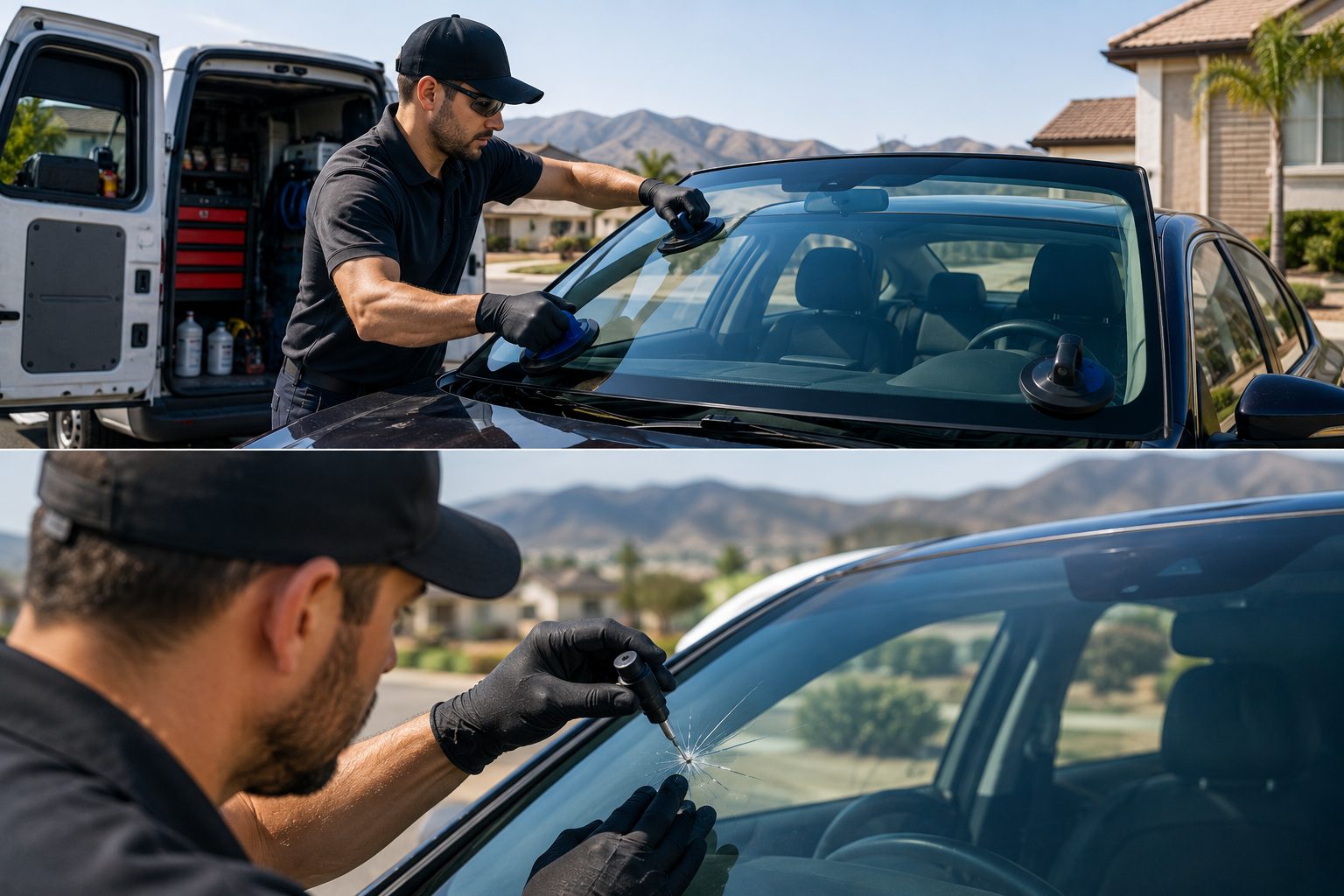
- Damage inspection: A technician first confirms that replacement (not repair) is needed, checking the size and location of cracks or chips.
- Removal of old glass: The technician completely removes the damaged windshield and any old urethane, moldings, or debris from the frame. The pinch weld area must be cleaned and any rust or corrosion treated. This ensures a flush fit and strong bond.
- Choosing the correct glass: Installers use glass that matches the vehicle’s original specifications. Ideally, this is OEM or certified aftermarket glass to maintain structural and optical properties. For ADAS-equipped cars, OEM glass is often recommended to match sensor calibration exactly.
- Adhesive selection and application: A high-quality urethane adhesive that meets or exceeds OEM specifications is applied in a continuous bead around the perimeter. Federal law and industry standards require the use of adhesives certified to the carmaker’s requirements.
- Installing a new windshield: The glass is lifted into place and carefully aligned. Technicians handle the glass without touching the bonding surface and press it uniformly onto the adhesive. Any attachments are reinstalled correctly.
- Curing time: The vehicle must remain stationary while the adhesive cures to at least its minimum bond strength. Most adhesives allow safe driving in about 30–60 minutes, but it is safest to wait the full recommended time. Some adhesives and conditions may require up to several hours.
- Securing the seal: After initial curing, moldings and seals are refitted. Technicians check the fit all around to prevent leaks. A post-installation check verifies that the windshield is watertight.
- ADAS recalibration: As noted above, any camera/radar systems are recalibrated once the glass is secure. This might involve using specialized targets or road tests. Documentation of calibration is provided if needed for insurance or warranty.
- Final inspection: The installer ensures the adhesive bead is continuous, no gaps exist, and the windshield marking indicates FMVSS compliance. They also clear all dashboard warnings and verify that wipers and sensors function normally.
Cost and Insurance Considerations
Replacing a windshield involves varying costs, and insurance coverage often applies when safety is involved.
- Cost factors: The price depends on vehicle make/model, whether advanced features are involved, and whether ADAS calibration is needed. Windshields with built-in sensors or acoustic layers are typically more expensive.
- Glass quality: OEM glass is pricier than generic aftermarket, but the higher upfront cost can reduce the risk of future issues. A high-quality windshield lasts longer and fits perfectly, maintaining safety standards.
- Recalibration cost: For ADAS-equipped cars, calibration adds several hundred dollars. Many shops quote ~$300–$600 for calibration in addition to the glass and installation. Luxury models can push this even higher.
- Insurance coverage: Most full-coverage auto insurance plans cover windshield replacement and often the ADAS calibration, since it is part of restoring safety features. Recent legislation in some states reflects recognition of this necessity. Policyholders should verify coverage details.
- Deductibles and claims: Industry reports indicate that windshield replacement costs are rising and can exceed common deductibles. When the out-of-pocket cost is high, more drivers use insurance. It’s important to use certified installers for insurance claims, as documentation is required.
- Time considerations: Compared to a simple repair, a full replacement can take a few hours. This may require scheduling at a shop rather than waiting for a quick mobile visit. However, this time investment ensures all safety measures are completed.
- Value of safety: While a high-quality replacement might cost more than a cheap fix, it is an investment in safety. Restoring the windshield’s full function, it prevents much greater costs down the road.
Conclusion
A properly installed windshield is essential to maintaining a vehicle’s crashworthiness and advanced safety features. Adhering to manufacturer standards for glass, adhesives, and calibrations ensures the vehicle performs as intended in an accident. When homeowners use qualified providers such as Lowest Price Auto, they can be confident that replacement preserves structural support, airbag effectiveness, and sensor accuracy.
Frequently Asked Questions
How long should I wait before driving after a windshield replacement?
Most urethane adhesives need at least 30–60 minutes to reach safe handling strength, but full curing can take many hours. It’s best to wait the recommended drive-away time (often 1–2 hours) or more. Avoid highway speeds and rough roads until the adhesive has set to meet safety standards.
Why is ADAS calibration necessary after replacing my windshield?
Many cars have cameras or sensors mounted on the windshield that assist with braking, lane-keeping, etc. If the windshield is moved or replaced, these sensors are slightly out of position. Calibration realigns the system so warnings and aids work correctly. Skipping calibration can cause false alerts or disabled safety features.
Do I need to use OEM-quality windshield glass?
For best safety, yes. OEM or equivalent glass matches the exact thickness and curvature specified by the manufacturer. Aftermarket glass that doesn’t meet specs can misalign ADAS sensors or degrade optical clarity. In some cases, high-quality certified aftermarket glass is acceptable, but avoid cheap generic windshields if safety features are involved.