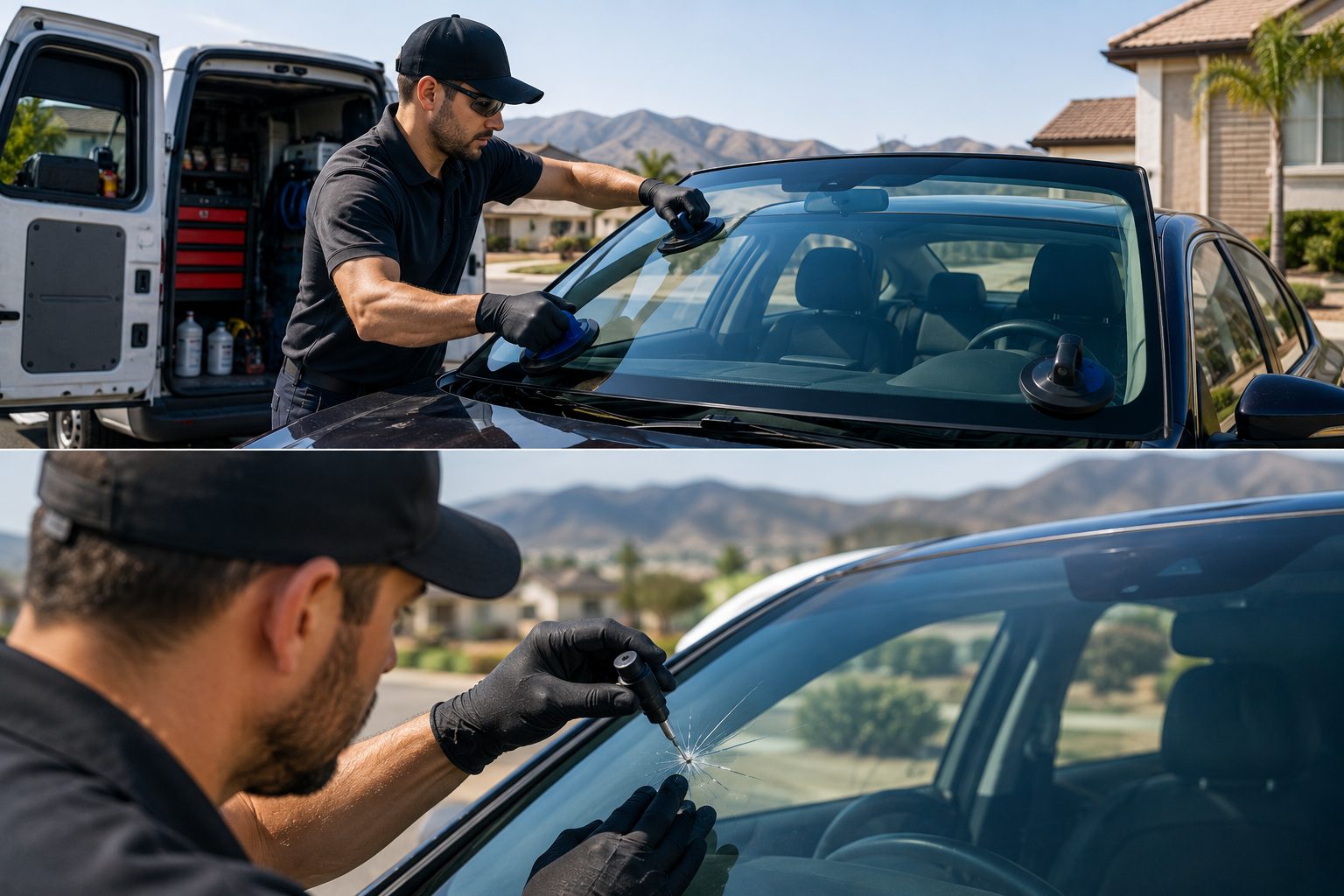
Why Delaying Auto Glass Repair Can Lead to Full Windshield Replacement
Delaying minor damage can allow cracks or chips to expand. This article explains how small issues progress, how structural support declines over time, and when repair is no longer viable.
How Small Damage Quickly Escalates With Auto Glass Repair
A minor chip often remains repairable only for a short period. Once stress, vibration, or contamination enters the damaged area, the break can spread across the windshield. Repair is designed for isolated damage, not cracks that affect visibility or structural performance.
Key factors that accelerate damage include:
- Constant temperature shifts between sunlight and cabin cooling
- Road vibration, bumps, and uneven highway movement
- Moisture entering the chip and weakening adhesion points
- Dirt contamination that prevents structural bonding
- Daily stress from windshield-mounted electronics
Once the damage extends beyond a specific size or depth, repair cannot restore proper strength. At that stage, replacement becomes the only safe corrective measure. Addressing chips early helps preserve visibility and structural stability.
Why Windshield Strength Declines When Damage Spreads
A windshield is built as a laminated safety unit. When damaged areas spread, they reduce the bonding surface that keeps the two glass layers sealed. Structural weakening is progressive, meaning every new millimeter of cracking increases risk.
Key outcomes of spreading damage include:
- Reduced cabin protection during a collision
- Increased risk of collapsing inward during vehicle rollover
- Incorrect airbag deployment angles during a crash
- Reduced expulsion resistance against road debris
When the windshield loses structural integrity, it can no longer support safety functions. Repair is designed for localized stabilization, not major restoration.
How Temperature Variations Make Minor Faults Worse
Glass expands when heated and contracts when cooled. Small chips often fail during rapid temperature swings, especially in summer and winter. Vehicle HVAC use can intensify fluctuations, allowing a minor defect to escalate.
Common triggers include:
- Running the defroster directly onto cold glass
- Intense midday heat followed by cabin cooling
- Rapid changes created by cold rainfall on a heated windshield
- Parking near reflective surfaces that intensify heat
Once internal stresses multiply, long cracks may form. Temperature pressure acts faster than most drivers expect.
The Safety Role of Windshields in Collision Events
Windshields contribute to multiple safety systems. When weakened, vehicle protection reduces across several points. Windshields are engineered to resist external force, maintain cabin seal, and absorb energy.
Primary contributions include:
- Preventing occupant ejection during collisions
- Supporting roof load during rollover events
- Stabilizing front airbags upon deployment
- Containing broken glass fragments within laminate layers
If compromised, the windshield cannot function as a passive safety device. Maintaining original strength is essential for predictable performance.
How Damage Can Interfere With Driver Visibility
Even minor visual distortion affects distance judgment and lane positioning. As cracks grow, they refract light, creating visual scatter. This may be more noticeable during night driving or against headlights.
Visibility concerns include:
- Localized blur that affects focus
- Reflection distortion during bright sunlight
- Poor performance in rain or debris conditions
- Increased glare sensitivity at night
Once visual output is altered, driving accuracy declines. Repair is intended to restore clarity when the damage remains confined.
When Damage Reaches Legal Thresholds
Many regions regulate windshield conditions to protect road safety. Once a crack crosses inspection limits, a vehicle may not pass routine checks. Compliance is not subjective; evaluation is based on location, size, and visibility obstruction.
Common assessment points include:
- Cracks located directly in the driver’s line of sight
- Fractures exceeding the allowed length
- Multiple chips that indicate structural spread
- Any damage interrupting wiper performance
Legal standards ensure vehicles remain structurally safe. Repair becomes less viable when thresholds are exceeded.
Why Moisture and Dirt Reduce Repair Success
Moisture intrudes through impact points and weakens laminate adhesion. Dirt particles embed within the damaged area, blocking resin from bonding correctly. Once contamination becomes permanent, structural repair is unlikely to succeed.
Typical contamination sources include:
- Precipitation entering through unsealed chips
- Car washing before addressing damage
- Road dust accumulation
- Oil and residue from cleaning chemicals
Contaminated chips may cure into internal cavities. Resin cannot reverse this condition.
The Cost Implications of Waiting
Repair costs remain lower because material and labor demands are limited. Replacement requires full removal, re-installation, and curing adhesives. As damage advances, the window for low-cost work closes.
Typical cost progression patterns include:
- Early repair remains localized and efficient
- Advanced repairs may require recalibration of electronics
- Replacement demands weatherproof bonding
- Additional parts may be required on newer vehicles
Cost escalation reflects increased labor and materials rather than service markup.
When Sensors and ADAS Systems Complicate Delays
Advanced Driver Assistance Systems rely on windshield-mounted sensors. A crack can interrupt sensor alignment or image accuracy. Once replacement is required, recalibration may be necessary for safe navigation.
Features affected include:
- Lane-departure warning cameras
- Adaptive cruise sensors
- Collision-avoidance systems
- Automatic braking support
When the glass is damaged, system accuracy declines. Repair cannot correct misalignment when the rack spread interrupts optical paths.
Situations Where Replacement Becomes Mandatory
Replacement is required when the windshield can no longer deliver structural support, visibility, or bonding. Industry thresholds define when repair is no longer appropriate.
Replacement is typically required when:
- A crack extends to the glass edge
- Damage obstructs the driver’s primary viewing area
- Multiple chips indicate structural instability
- Lamination separation becomes visible
- Safety equipment alignment is impaired
Replacement ensures that the glass functions as designed. Repair remains a preventive measure, not a corrective cure.
The Limited Time Window for Chip Repair
Repair is only feasible when resin can penetrate the cavity. Time reduces this ability because micro-fractures cure and widen. The structural gap becomes impossible to reinforce.
Typical indicators of limited time include:
- Chip discoloration
- Cloudy impact spots
- Visible spreading under sunlight
- Small fragments form around the contact point
Repair should be scheduled promptly to maintain bonding potential.
How Professional Inspection Helps Decision-Making
Inspection identifies whether damage remains repairable or requires full replacement. Assessment relies on visual measurement, depth detection, and structural alignment. Objective review prevents unnecessary decisions.
Inspection steps include:
- Damage size measurement
- Crack direction analysis
- Laminate layer evaluation
- Sensor alignment review
Inspection supports safety-based judgment. No intervention should proceed without a correct evaluation.
The Role of a Service Provider in Quality Work
A qualified provider ensures correct bonding, resin application, and environmental curing. Barriers include weather, humidity, and unregulated conditions. Poor workmanship can cause future cracking.
Professional contributions include:
- Controlled resin placement
- UV-based curing systems
- Proper adhesive bonding
- Standardized calibration routines
Quality ensures predictable outcomes, not cosmetic repair.
Why Delaying Repairs May Lead to Auto Glass Replacement
When a minor defect reaches structural thresholds, the only corrective measure involves full removal and installation. Replacement restores the original strength required for safety-critical functions and visual clarity.
Replacement is required when:
- Damage interrupts the laminate structure
- A crack expands across the viewing field
- Adhesive failure risks detachment
- Safety system sensors are impaired
- Seal integrity cannot be restored
Once replacement is necessary, delaying work may further compromise safety. A qualified provider, such as Lowest Price Auto Glass & Tint, can restore windshields to required safety standards.
Frequently Asked Questions
How long can I wait to fix a minor windshield chip?
Repair should be scheduled promptly because temperature and vibration can spread cracks within days.
Can a cracked windshield still pass inspection?
Cracks within the driver’s line of sight or beyond regulated size limits generally fail inspection.
Is the repair effective once moisture enters the crack?
Moisture reduces bond strength and often prevents full resin penetration.
Can temperature changes break a windshield further?
Rapid heating or cooling expands and contracts glass, increasing crack length.
Do small cracks affect airbags?
Yes. Airbags rely on windshield support to deploy at the correct angle.
Can dirty cracks still be repaired?
Contamination often prevents resin from bonding, limiting repair success.
Does replacement require sensor recalibration?
If sensors are mounted near the damaged area, recalibration may be necessary.
Is replacement always more expensive than repair?
Yes, because replacement involves complete glass installation and adhesive curing.
Final Thought
Early action prevents structural compromise and visibility reduction. Once cracks expand, repair may no longer provide the required safety performance. Addressing windshield damage promptly supports safer operation and reduces long-term corrective needs.