Windshield Replacement vs Temporary Fixes: What Drivers Should Know
This article explains how temporary sealing products differ from structural installation, when a full windshield replacement is required, and how drivers can evaluate repair suitability based on safety, clarity, and long-term performance.
When Windshield Replacement Becomes Necessary
Replacement becomes the correct option when cracks or chips affect structural bonding, visibility, or edge stability. A windshield functions as a load-bearing component, so once damage undermines strength, temporary solutions cannot restore performance.
Replacement is generally required when:
- Cracks reach the edges of the windshield and compromise adhesion
- Laminate separation creates internal clouding or moisture intrusion
- Visibility is obstructed in the driver’s primary viewing field
- Multiple chips suggest accumulated fatigue across the glass
- Advanced Driver Assistance Systems rely on intact mounting surfaces
When structural performance cannot be maintained, a new windshield restores predictable strength and uniform optical clarity.
What Temporary Fixes Can and Cannot Do
Temporary fixes are designed to slow crack progression or reduce air intrusion. They do not restore structural strength, do not correct laminate damage, and do not address safety-system requirements. Their purpose is limited.
Temporary fixes typically include:
- Tape to prevent dirt or moisture entry in the short term
- Retail resin kits that reduce surface blemishes
- Short-term stabilizers for small, contained chips
- Measures that delay expansion by reducing local vibration
Temporary materials cannot reinforce a damaged laminate layer or duplicate manufacturer-specified bonding. Their shelf-life varies according to temperature, moisture, and driving activity.
Why Strength and Laminate Bonding Determine Long-Term Safety
Windshields are built from two glass layers bonded to an internal laminate. The assembly controls break patterns, supports the cabin structure, and retains occupants. Once that laminate bond is compromised, temporary patches do not reverse the condition.
Structural concerns include:
- Reduced load distribution during collisions
- Poor energy absorption under frontal impact
- Decreased roof-support strength in rollovers
- Structural separation that accelerates crack growth
Long-term durability is dependent on uniform bonding, not surface coverage. Only replacement restores original structural intent.
How Visibility Declines Under Expanding Damage
Even small cracks refract light, producing visual distortion. As damage spreads, image clarity degrades. Temporary materials may reduce localized glare, but they cannot restore optical uniformity.
Visibility limitations include:
- Distortion during night driving
- Refractive glare under direct sun
- Difficulty tracking road markings or edges
- Reduced clarity during rain or debris exposure
When clarity falls below standard viewing requirements, installing a new windshield is the corrective path.
The Limits of Retail Repair Kits
Retail kits are formulated for small, contained damage that remains clean and dry. Resin penetration is shallow and cannot accommodate large cracks or contamination. These products are intended for cosmetic stabilization.
Kit constraints include:
- Limited penetration into deep cavities
- Inability to restore edge adhesion
- Variable results due to air pockets
- No reinforcement for widespread stress points
Retail liquid resin should not be relied upon as a long-term structural solution. Its application is a preventive measure, not an engineering correction.
The Risks of Moisture and Dirt Contamination
Moisture weakens laminate bonds and prevents resin from adhering within the cavity. Dirt embeds into the fracture, causing air pockets and optical disturbance. Temporary sealing cannot remove embedded material.
Contamination concerns include:
- Reduced future repair success
- Clouded appearance within the chip
- Progressive weakening near the impact point
- Permanent refractive distortion
When contamination becomes visible, replacement ensures clean, uniform bonding.
When Temperature Pressure Expands Existing Cracks
Windshields continually expand and contract due to heat and cooling. Seasonal differences and HVAC use accelerate crack propagation. Temporary fixes slow expansion only under limited thermal conditions.
Thermal contributors include:
- Defroster heat applied to a cold surface
- Direct sunlight on cooled glass
- Rain on heated glass
- Significant day-to-night temperature swings
Thermal stress builds internal pressure. Once cracks widen, surface treatments cannot restore plate stiffness.
When Road Vibration Promotes Crack Spread
Vehicles distribute vibration through the windshield frame. Damaged areas act as propagation points. Temporary seals may reduce airflow noise but do not impede vibration transfer.
Vibration triggers include:
- Highway speed pressure
- Rough pavement and expansion joints
- Pothole displacement
- Vehicle chassis flex
Propagated fractures follow the stress path. Replacement eliminates the weakened section rather than attempting to stabilize it.
When Safety Systems Depend on Glass Precision
Advanced Driver Assistance Systems rely on mounted sensors with calibrated angles. Cracks can distort the optical field or cause camera misalignment. Temporary fixes do not correct these deviations.
Systems depending on windshield uniformity include:
- Collision-avoidance cameras
- Lane-departure monitoring
- Adaptive cruise sensors
- Automatic braking calculations
If the windshield becomes unsuitable for sensor accuracy, replacement offers a controlled mounting surface.
When Inspection Requirements Specify Acceptable Damage
Many jurisdictions limit windshield cracks within the driver’s viewing area. Inspection standards are based on size, direction, and structural impact. Temporary patches do not change these standards.
Inspection disqualification may involve:
- Cracks exceeding the maximum permitted length
- Chip clusters in regulated viewing fields
- Edge cracks that threaten adhesive seals
- Distortion affecting vehicle safety
If a vehicle cannot meet required inspection thresholds, windshield installation is mandatory for compliance.
Why Air and Water Intrusion Matters
Windshields seal the cabin from moisture and pressure. Once the bonding edge is compromised, water may reach interior surfaces and electrical components. Temporary seals may reduce leaks, but cannot replicate adhesive curing.
Intrusion concerns include:
- Moisture beneath the dash assemblies
- Corrosion around mounting points
- Mold under trim components
- Whistling airflow noise at speed
Restored sealing depends on full adhesive bonding through replacement.
When Noise and Structural Flex Increase
Cracks change how the windshield disperses mechanical energy. As a result, flexibility increases. Temporary products do not correct pressure imbalance or rigidity loss.
Mechanical effects include:
- Higher noise levels at highway speeds
- Uneven pressure distribution on the glass
- Increased susceptibility to additional cracking
- Reduced impact resistance
Predictable performance requires uniform rigidity.
Balancing Short-Term Convenience Against Long-Term Outcomes
Temporary fixes are based on short-term risk reduction. Drivers often use them for convenience rather than structural value. If the windshield remains in service long after damage has appeared, external stresses compound.
Long-term considerations include:
- Reduced safety performance
- Delayed corrective action costs
- Greater exposure to failure under routine load
- Lower success rates for professional resin repair
Short-term measures should be viewed as interim protection rather than a substitute for permanent installation.
When Professional Assessment Is Appropriate
Professional evaluation identifies whether damage meets repair criteria. This includes scoring crack length, position, depth, and laminate impact. Without assessment, drivers may misjudge structural limits.
Assessment typically reviews:
- Chip diameter and depth
- Distance from structural edges
- Presence of contamination
- Whether cracking has changed direction
Evaluating early helps determine whether a temporary solution has any value.
The Role of Resin-Based Windshield Repair
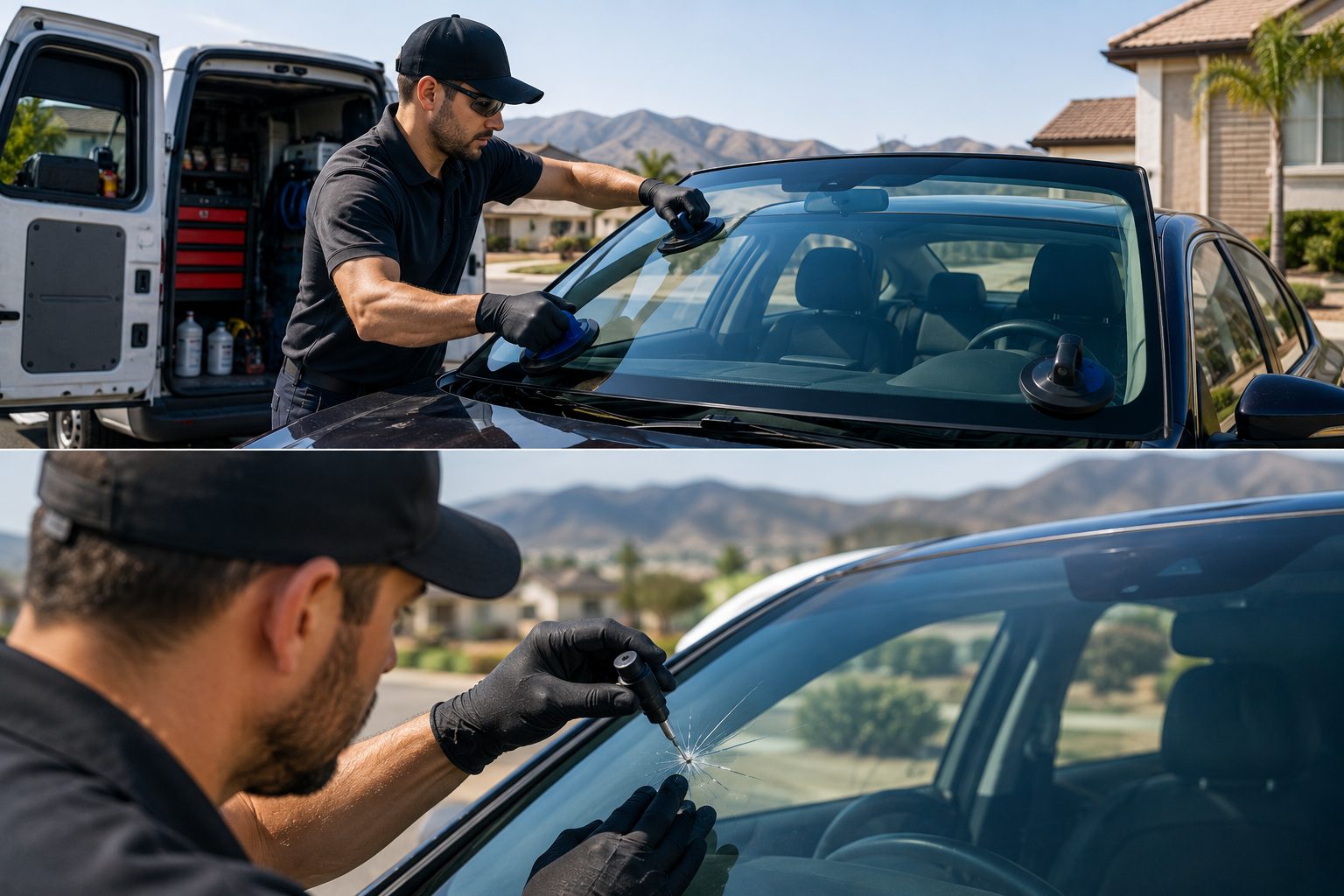
Professional resin stabilizes small chips and limited cracks by bonding the outer layer. This method is effective only when damage remains confined. It is not intended for advanced cracking that affects load distribution.
Repair is appropriate when:
- Cracks remain short and contained
- Moisture has not penetrated the cavity
- Laminate integrity is not compromised
- Optical distortion stays minimal
Professional resin is engineered for targeted stabilization rather than comprehensive reconstruction. A provider, such as Lowest Price Auto Glass & Tint, can evaluate suitability based on measurable thresholds.
When Drivers Should Transition From Temporary Measures
Temporary solutions should be discontinued once structural indicators appear. Continued reliance reduces clarity and increases crack length. At that point, adhesive systems can no longer maintain proper bonding.
Transition triggers include:
- Line-of-sight obstruction
- Multiple fractures form around the impact location
- Internal discoloration is forming between the glass layers
- Persistent air or water leakage
Transition decisions should be based on physical evidence rather than the duration of use.
Frequently Asked Questions
Do temporary windshield fixes stop cracks permanently?
No. Temporary fixes only delay crack spread and do not restore structural bonding.
Can small cracks be repaired instead of replaced?
Yes. Professional repair is suitable when the damage is short, clean, and not in the viewing field.
Do retail repair kits work on long cracks?
No. They are intended for contained surface chips.
Does temperature change make cracks worse?
Yes. Expansion and contraction can increase crack length rapidly.
Can temporary materials restore clear visibility?
They may reduce distortion slightly, but they cannot restore optical uniformity.
Are windshield sensors affected by damage?
Yes. Cracks may misalign cameras and require installation and calibration.
Will all inspection failures require replacement?
If damage violates visibility or size rules, replacement is typically required.
Is replacement always more durable than temporary fixes?
Yes. A new windshield provides uniform structural bonding.
Final Thought
Short-term products limit crack progression but do not provide structural reinforcement. When visibility, adhesion, or laminate integrity is affected, temporary materials are not an adequate solution. Evaluating physical signs of deterioration helps determine when permanent windshield installation is necessary.